Energy Explained
Why Is Renewable Electricity Still Being Wasted?
On windy nights, Britain can produce more clean electricity than the network can deliver to the places using it. Understanding why that surplus goes unused is the starting point for using it better.
By Kettle Energy, Editorial team7 min read
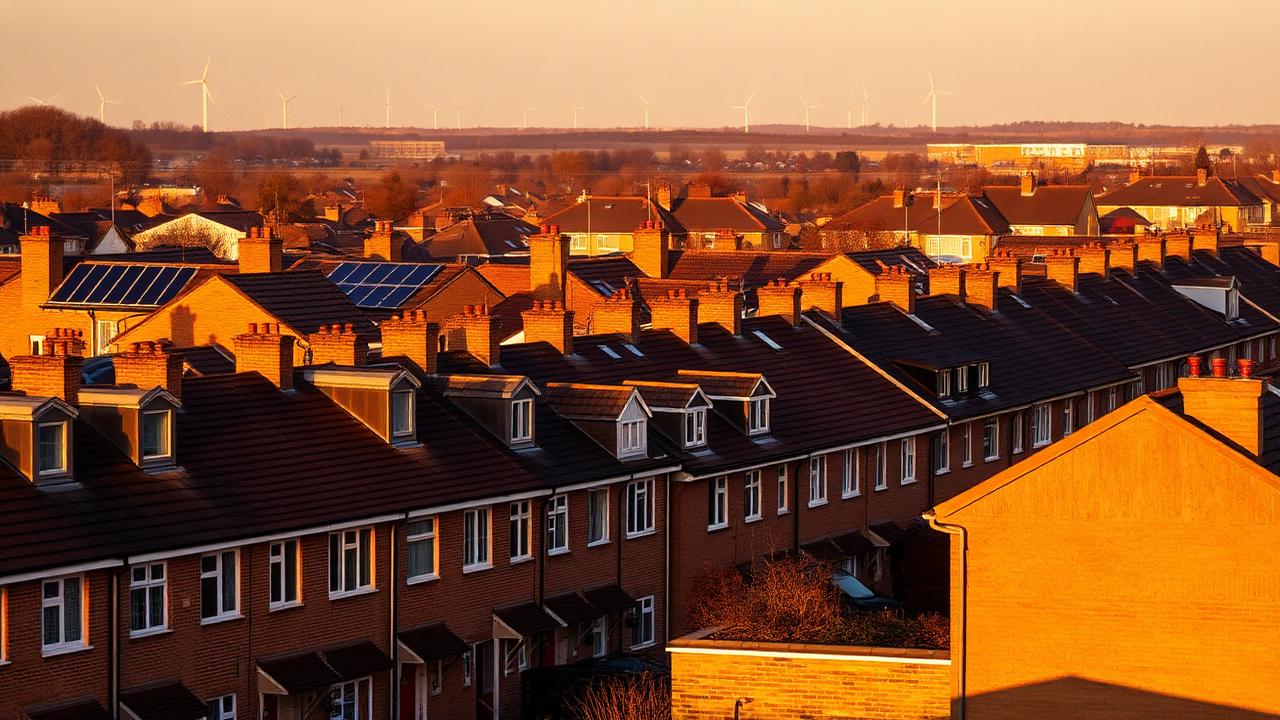
It sounds like a contradiction. Britain has spent two decades building wind and solar capacity, energy bills remain high, and yet on some days generators are asked to produce less than they could. The electricity is there. The wind is blowing. It simply cannot get to the people who would use it.
This is usually described with the word curtailment, which is one of those industry terms that hides a fairly simple idea. Curtailment means turning down generation that the system cannot accommodate at that moment. It is not waste caused by carelessness. It is the result of a network that was designed for a different kind of electricity system.
Electricity has to be used the instant it is made
Unlike gas or water, electricity is not naturally stored in the network. Supply and demand have to match second by second. If more power is generated than is consumed, the frequency of the grid rises; if less, it falls. Keeping that balance is the job of the system operator, and the tools available are blunt: ask generators to produce more, ask them to produce less, or move power between regions.
That last option is where the difficulty begins. Much of Britain's wind capacity sits in Scotland and off the north and east coasts. Much of its demand sits in the cities of England. The transmission network between the two has a finite capacity, and on a windy night that capacity fills up.
The bottleneck is physical, not commercial
When the cables are full, no market mechanism can push more electrons down them. The system operator has to pay some generators to reduce output, and often pay gas plants closer to the demand to increase theirs. The cost of doing this appears on everyone's bill.
- The window in which supply and demand must match
- SecondsThe window in which supply and demand must match
- When wind surplus most often occurs
- OvernightWhen wind surplus most often occurs
- When household demand typically peaks
- 4–7pmWhen household demand typically peaks
The gap is a timing problem more than a supply problem
The clean electricity that gets turned down is rarely turned down because nobody wants it. It is turned down because nobody wants it at three o'clock in the morning in the place where it is being generated. A few hours later, the same households are boiling kettles, running ovens and charging cars, and the system is leaning on gas to cover it.
- Wind output is highest overnight and in winter storms, when household demand is low.
- Solar output peaks in the middle of the day, when many homes are empty.
- Household demand peaks in the early evening, after work and school.
- The gap between those curves is filled by whatever can respond quickly — usually gas.

What actually closes the gap
There are three broad answers, and Britain is pursuing all of them. The first is building more network capacity, which works but takes a decade or more per major project. The second is moving demand — encouraging people and businesses to use electricity at different times. The third is storage: holding the surplus until it is wanted.
- Reinforce the transmission network so more power can flow south. Effective, slow, expensive.
- Shift demand through time-of-use tariffs and smart appliances. Cheap, but limited by how much of daily life people can genuinely reschedule.
- Store surplus electricity locally in batteries and release it at peak. Faster to deploy, and it does not ask households to change their routines.
“The cheapest unit of electricity is the clean one that would otherwise have been turned down.”
Why this matters for households
For most people, the abstract question of grid constraint becomes concrete in one place: the standing charge and unit rate on a bill. The cost of balancing the system, including curtailment payments, is socialised across consumers. Reducing the amount of clean electricity that has to be turned down is, over time, one of the levers that reduces what everyone pays.
It also matters for carbon. Every hour that a gas plant runs to cover an evening peak, while a wind farm is being paid to stand still, is an hour of avoidable emissions. Shifting electricity through time is one of the few interventions that improves cost and carbon at once.
The short version
Renewable electricity is wasted not because it is unwanted, but because the network cannot always deliver it to the right place at the right moment. Storage does not fix the network, but it does something useful: it makes the timing mismatch matter less. That is the problem Kettle is built around.
Important notes
- Kettle Energy is at prototype stage and is not currently a licensed electricity supplier.
- Nothing in this article constitutes an offer of supply or a guarantee of savings.